Your Trusted Private Label Memory Foam Manufacturer & Wholesale
Your Trusted Private Label Memory Foam Manufacturer
We make it easy for you to build your brand by providing end to end solution to your private label OEM/ODM production.
We ensure that every OEM/ODM Memory Foam with design and comfort will stand out.
Union-win specializes in private label Memory Foam customization, offering a variety of styles, fabric appearances, and comfort solutions.
We provide Private Label Memory Foam with a broad range of designs, packaging, and customization options to meet diverse client needs.
Additionally, we leverage a strong supply chain to deliver extensive packaging customization services for your Memory Foam , ensuring every detail aligns with your brand.
Standard Memory Foam
Gel Memory Foam
Charcoal Memory Foam
Bio-Based Memory Foam
Hey, don't hesitate to try & feel the FREE SAMPLES before making up your decision
Find A Quality Manufacturer For Your Memory Foam
Reasons to choose union-win as your private label manufacturer
Source factory
Self-produced Raw Materials
CNC Cutting Equipment
Foaming line
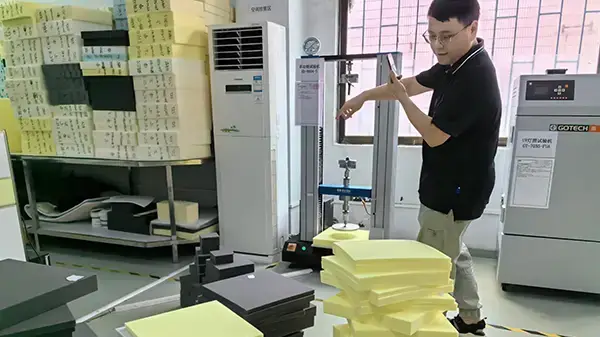
Testing machine
Certified Laboratory
You can totally trust us with all certifications shown below
Memory Foam Manufacturer Production Process
Quality is our fundamental principle, and the stone of win-win cooperation. It requests completed production process and patient and responsible QC team.
1. Raw Materials
2. Foaming Process
3. QC on Foam
4. Speical shape foam cutting
5. Foam cutting
6. Fabric Cutting
7. Sewing
8. Filling shredded foam
9. Finished Product
10. Quality Checking
11. Packing
12. Ready to Ship
Hear from our clients
Our clients love working with us, just read what they have to say!
As a foam sponge buyer in the United States specializing in pet supplies, my experience with Union-Win has been nothing short of exceptional. Over the past year, we've imported a variety of pet products from Union-Win, including their innovative plush blanket-style pet mats, and the quality has consistently surpassed our expectations.
More Things About Memory Foam
Table of Contents
The Science Behind Memory Foam
Memory foam is a viscoelastic polyurethane foam, meaning it exhibits both viscous (slow movement) and elastic (quick recovery) properties. This unique combination allows it to conform to body shape under pressure and then slowly return to its original form.
Key Properties:
- Viscoelasticity: Memory foam responds to heat and pressure, molding to the shape of an object and evenly distributing weight.
- Density Variations: Higher density foam (50D–80D) provides better support, durability, and pressure relief, while lower density foam (30D–40D) offers softer comfort.
- Open vs. Closed Cell Structure: Open-cell memory foam allows for better airflow and breathability, whereas closed-cell foam provides a firmer structure.
History & Evolution
- 1966: Developed by NASA’s Ames Research Center to improve seat cushioning and crash protection for astronauts.
- 1980s: Commercialized by Tempur-Pedic and other companies, mainly for medical applications.
- 1990s-Present: Memory foam expanded into consumer products such as mattresses, pillows, office chairs, sofas, sports equipment, and medical devices.
Advanced Types of Memory Foam
Modern innovations have led to several variations of memory foam:
| Type | Features | Best For |
|---|---|---|
|
Traditional Memory Foam
|
High-density, slow response, retains heat
|
Basic mattresses, pillows
|
|
Gel-Infused Memory Foam
|
Gel beads for cooling effect
|
Hot sleepers, summer bedding
|
|
Plant-Based Memory Foam
|
Replaces petrochemicals with natural oils, eco-friendly
|
Sustainable options
|
|
Graphite-Infused Memory Foam
|
Improved heat dissipation, anti-microbial
|
Luxury bedding, tech-friendly applications
|
|
Copper-Infused Memory Foam
|
Anti-bacterial, moisture-wicking, temperature regulation
|
People with allergies, high-humidity areas
|
|
Airflow (Open-Cell) Memory Foam
|
Increased breathability, softer feel
|
People needing better ventilation
|
|
Charcoal/Bamboo-Infused Memory Foam
|
Odor control, antibacterial, moisture absorption
|
Humid environments, allergy sufferers
|
Applications Beyond Bedding
Memory foam is commonly used in:
- Furniture & Seating
- Office chairs, gaming chairs, car seats, and theater seating
- Medical & Health
- Wheelchair cushions, hospital bed mattresses, prosthetics
- Sports & Fitness
- Shoe insoles, yoga mats, helmet padding
- Travel Accessories
- Neck pillows, seat cushions for airplanes, RV mattresses
Memory Foam vs. Other Foams
| Feature | Memory Foam | Latex Foam | High-Resilience Foam | Regular PU Foam |
|---|---|---|---|---|
|
Feel
|
Soft, slow-recovery
|
Bouncy, quick-recovery
|
Firm, resilient
|
Soft, non-conforming
|
|
Durability
|
Medium-High
|
High
|
High
|
Low-Medium
|
|
Cooling
|
Retains heat (unless infused)
|
Naturally breathable
|
Breathable
|
Poor ventilation
|
|
Allergy Resistance
|
Anti-dust mite
|
Naturally hypoallergenic
|
Moderate
|
Low
|
|
Price
|
Mid-High
|
High
|
Mid-High
|
Low
|
Memory Foam & Sleep Science
Memory foam helps improve sleep quality by:
- Reducing motion transfer (good for couples)
- Alleviating pressure points (ideal for side sleepers)
- Aligning the spine and reducing back pain
- Providing a “hugging” feel that many people find comforting
Who Benefits the Most?
✔ Side sleepers → Relieves shoulder and hip pressure
✔ People with joint pain → Eases arthritis & back pain
✔ Light sleepers → Absorbs movement, reduces sleep disturbances
Downsides & Solutions
Despite its advantages, memory foam has some drawbacks:
| Problem | Solution |
|---|---|
|
Heat Retention
|
Use gel-infused, open-cell, or graphite-infused memory foam
|
|
Off-Gassing Smell
|
Choose CertiPUR-US certified foam with low VOCs
|
|
Firm in Cold Temperatures
|
Use temperature-neutral formulations
|
|
Heavy Weight
|
Opt for medium-density foam for better portability
|
Choosing the Right Memory Foam
Key Factors to Consider:
- Density:
- 30D-40D: Soft, budget-friendly
- 50D-60D: Medium, balanced comfort & support
- 70D-80D: Firm, durable, high-end feel
- Thickness:
- 2-3 cm → Pillow tops, seat cushions
- 5-7 cm → Mattress toppers, comfort layers
- 10+ cm → Full mattresses, gaming chairs
- Certifications:
- CertiPUR-US → Low VOCs, no harmful chemicals
- OEKO-TEX → Textile safety
- GREENGUARD → Indoor air quality safety
Environmental Impact & Sustainability
- Traditional memory foam is petroleum-based and can emit VOCs (volatile organic compounds).
- Eco-friendly alternatives include:
- Soy-based or bio-based foams
- Recyclable foams to reduce landfill waste
- CertiPUR-US certified foams with reduced chemical emissions
Future Trends in Memory Foam
- Smart Memory Foam → Embedded with sensors to track sleep patterns
- Self-Cooling Foams → Enhanced phase-change materials for all-night comfort
- AI-Designed Mattresses → Personalized firmness adjustments via smart tech
- Hybrid Foams → Combining memory foam with latex, pocket springs for better support
Most Asked Questions About OEM ODM Private Label Memory Foam
Are you interested in creating a private-label Memory Foam but don’t know where to start?
Here are 10 FAQs to help guide you through the process:
1. What’s the Difference Between OEM, ODM, and Private Label?
- OEM (Original Equipment Manufacturer) → You provide a design or specifications, and the factory manufactures it for you.
- ODM (Original Design Manufacturer) → The factory already has a design, and you can modify it slightly or sell it under your brand.
- Private Label → You customize an existing product with your logo, packaging, and branding but don’t change the core design.
2. What Types of Memory Foam Products Can Be Private Labeled?
Almost any memory foam product can be OEM/ODM/private labeled, including:
Memory Foam Pillows → Contour, cervical, gel-infused, bamboo charcoal, etc.
Memory Foam Mattresses → Hybrid, orthopedic, cooling gel, etc.
Mattress Toppers → Pressure-relief, high-density, infused materials.
Sofa Cushions & Seats → Gaming chairs, car seat cushions, ergonomic office seats.
Pet Beds → Orthopedic dog beds, cooling pet mats.
Beauty & Medical Products → Lash beds, medical cushions, pregnancy pillows.
3. How Do I Start My Own Private-Label Memory Foam Brand?
Step 1: Identify the product you want (pillow, mattress, etc.).
Step 2: Choose OEM, ODM, or Private Label based on customization needs.
Step 3: Find a reliable memory foam manufacturer (preferably CertiPUR-US, OEKO-TEX, and ISO certified).
Step 4: Customize the foam type, firmness, cover fabric, and packaging.
Step 5: Request a sample and make necessary modifications.
Step 6: Confirm order quantity, lead time, and logistics.
Step 7: Launch your brand and start selling!
4. Can I Customize the Density and Firmness of the Memory Foam?
Yes! Manufacturers can adjust:
- Density: Higher density (50D-80D) = More support & durability.
- Firmness: Soft, medium, or firm feel depending on foam formula & additives.
- Infusions: Cooling gel, bamboo charcoal, copper, aloe vera, etc.
Example:
- A soft 30D-40D pillow for budget buyers.
- A medium-firm 50D-60D mattress topper for better support.
- A firm 70D-80D orthopedic pillow for medical use.
5. What Certifications Should I Look for in a Memory Foam Manufacturer?
Quality certifications are crucial for safety and international compliance. Look for:
CertiPUR-US → No harmful chemicals (US & EU markets).
OEKO-TEX Standard 100 → Safe textiles, no toxins.
ISO 9001 → Quality management certification.
BSCI → Ethical business and labor standards.
Fire Retardant Certifications → CFR 1633 (USA), BS 7177 (UK), CA TB 117 (California).
6. What’s the Minimum Order Quantity (MOQ) for Private-Label Memory Foam?
- Standard MOQ → 100-500 pieces (for pillows & cushions).
- Custom OEM MOQ → 500-1000 pieces (for fully customized foam & covers).
- Mattresses & Toppers → MOQ can start at 50-100 units for large items.
Pro Tip: Some factories allow lower MOQ if you choose standard designs with only branding modifications.
7. Can I Customize the Packaging and Branding?
Yes! Private-label memory foam products can have fully customized packaging, including:
Custom Box Design → Your logo, brand colors, and product details.
Vacuum Packaging → Compressed memory foam packaging for easy shipping.
🛏 Branded Fabric Covers → Embroidered or printed logos on pillow/mattress covers.
Custom Inserts → Instructions, warranty cards, QR codes linking to your website.
8. How Long Does It Take to Manufacture OEM/ODM Memory Foam?
Production timeline varies based on customization level:
- Private Label → 15-30 days (just adding logos & packaging).
- ODM (Minor Customization) → 30-45 days (changing foam type, cover material).
- OEM (Full Customization) → 45-60 days (custom mold, unique foam formula).
Pro Tip: Ordering samples first can save time by ensuring the product meets your expectations.
9. What Are the Best Selling Memory Foam Products for Private Label?
Trending Private-Label Memory Foam Products:
Gel-Infused Cooling Memory Foam Pillows (great for hot sleepers)
Ergonomic Cervical Neck Pillows (best for back & side sleepers)
Adjustable Loft Memory Foam Pillows (customizable height)
Orthopedic Memory Foam Seat Cushions (popular for WFH & gaming)
Pet Beds with Orthopedic Foam (luxury pet market is booming!)
Hybrid Memory Foam Mattresses (combining foam with pocket springs)
Pro Tip: Focus on a niche (e.g., “cooling pillows for hot sleepers” or “luxury dog beds”) to stand out!
10. Where Can I Sell My Private-Label Memory Foam Products?
Amazon FBA → Best for high-demand products (pillows, toppers).
Shopify/WooCommerce → Create your own brand store.
Alibaba/B2B Wholesale → Sell bulk orders to resellers.
TikTok/Instagram Shops → Direct-to-consumer branding.
Retail Stores & Dropshipping → Partner with furniture or bedding retailers.